Welcome to Emston Tech, One Stop Shop For All Your Solar Needs!
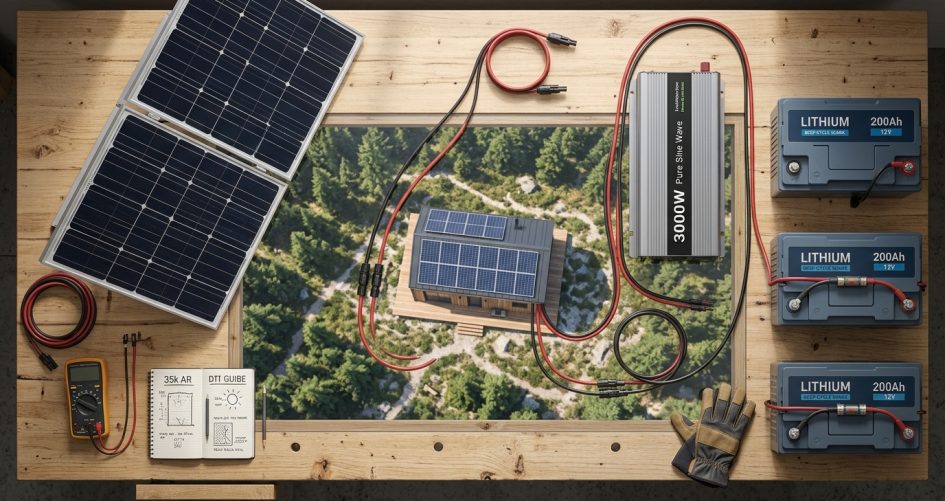
Off-grid solar kits are designed to provide independent power without relying on a utility connection. They are commonly used for cabins, remote homes, RVs, workshops, farms, backup applications, and other locations where reliable electricity is needed away from traditional infrastructure.
While many off-grid solar kits are marketed as complete solutions, it is important to understand exactly what is included before purchasing. A kit may contain the core power equipment but leave out installation materials, safety components, permits, or other items required for a fully operational system.
This guide explains what is typically included in an off-grid solar kit, what may need to be purchased separately, and how to choose a system that matches your energy needs.
An off-grid solar kit is a group of solar components designed to generate, store, and deliver electricity independently from the utility grid. Unlike grid-tied solar systems, off-grid systems must store energy because there is no utility connection available when solar production drops.
Most off-grid solar systems are built around four primary components:
The exact contents of a kit vary by manufacturer, system size, and intended application. Some kits are designed for small loads such as lighting and electronics, while others support larger applications such as homes or commercial buildings.
Solar panels are the energy generation portion of the system. The number and wattage of panels included depend on how much electricity the system is designed to produce.
A complete panel package may include:
When reviewing a kit, consider panel efficiency, available installation space, expected sunlight conditions, and future expansion options.
The charge controller manages the energy flow between solar panels and batteries. It helps protect the battery bank by controlling charging levels and preventing issues caused by improper charging.
Many modern systems use MPPT (Maximum Power Point Tracking) charge controllers because they can optimize solar energy collection across changing conditions. Smaller or simpler systems may use PWM controllers.
| Charge Controller Type | General Characteristics | Common Applications |
|---|---|---|
| MPPT | Tracks solar panel output to improve energy harvesting and supports a wider range of panel configurations. | Larger off-grid systems, cabins, homes, and systems needing higher efficiency. |
| PWM | Simpler technology that works well in smaller, basic solar setups. | Small lighting systems, basic RV applications, and low-power projects. |
The battery bank is one of the most important parts of an off-grid solar system because it stores energy when sunlight is unavailable.
Off-grid kits may include different battery technologies, such as:
Battery size should be matched to your daily energy use, desired backup time, and the appliances you plan to operate.
The inverter converts the DC electricity stored in batteries into AC electricity used by most household devices.
Depending on the kit, the inverter may be:
Important inverter specifications include continuous power rating, surge capacity, input voltage compatibility, and the type of AC loads it can support.
The phrase “complete solar kit” does not always mean every part required for installation is included. Always review the product list carefully before ordering.
Some kits include panel mounting equipment, while others do not. The correct mounting solution depends on where the panels will be installed.
Items that may need to be purchased separately include:
Many off-grid kits include basic cables, but longer installation distances or larger systems may require additional electrical materials.
Possible additional items include:
Some off-grid users add a generator for extended cloudy periods or unusually high energy demand. A generator is not automatically included in most solar kits and should be considered based on your location, climate, and reliability requirements.
Equipment packages generally do not include labor, permits, inspections, engineering reviews, or local code requirements. These requirements vary by location and project type.
| Item | Usually Included? | What to Check |
|---|---|---|
| Solar panels | Often included | Panel quantity, wattage, efficiency, and compatibility. |
| Battery bank | Often included in complete kits | Battery chemistry, capacity, and expansion options. |
| Inverter | Often included | Power rating, voltage requirements, and AC output. |
| Racking | Sometimes included | Mounting location and structural requirements. |
| Installation materials | Varies | Wire lengths, protection devices, and local requirements. |
Selecting the right kit starts with understanding your energy needs. Buying based only on panel size or battery capacity can result in a system that does not perform as expected.
Make a list of the devices you want to power and estimate how many hours each device runs per day. Include appliances with high startup requirements, such as pumps, refrigerators, and power tools.
Solar production depends on factors such as sunlight availability, seasonal changes, shading, and panel orientation. A system designed for year-round use may require different sizing than one used occasionally.
Battery capacity determines how long your system can operate without solar production. Consider whether you need overnight power only or several days of stored energy.
A flexible kit design can make it easier to add more panels, batteries, or additional equipment later as your energy needs grow.
Off-grid solar kits can support a wide range of uses, including:
Most off-grid solar kits include solar panels, a charge controller, battery storage, and an inverter. Additional components vary depending on the manufacturer and system design.
Yes, some larger off-grid systems can support whole-home energy needs, but the system must be carefully sized based on electricity consumption, appliance loads, battery requirements, and available solar resources.
Not always. Some kits include mounting hardware, wiring, and safety equipment, while others require these items to be purchased separately. Always review the included components list before purchasing.
Many systems can be expanded, but compatibility depends on the inverter, battery technology, charge controller limits, and system design. Planning for future growth during the initial purchase can make upgrades easier.
An off-grid solar kit can provide reliable independent power when the components are properly matched to your energy needs. Understanding what is included—and what is not—helps you avoid surprises and build a system that performs well over time.
Whether you need solar panels, inverters, battery backups, carports, complete kits, or racking solutions, Emston Tech can help you find the right equipment for your off-grid solar project.