Welcome to Emston Tech, One Stop Shop For All Your Solar Needs!
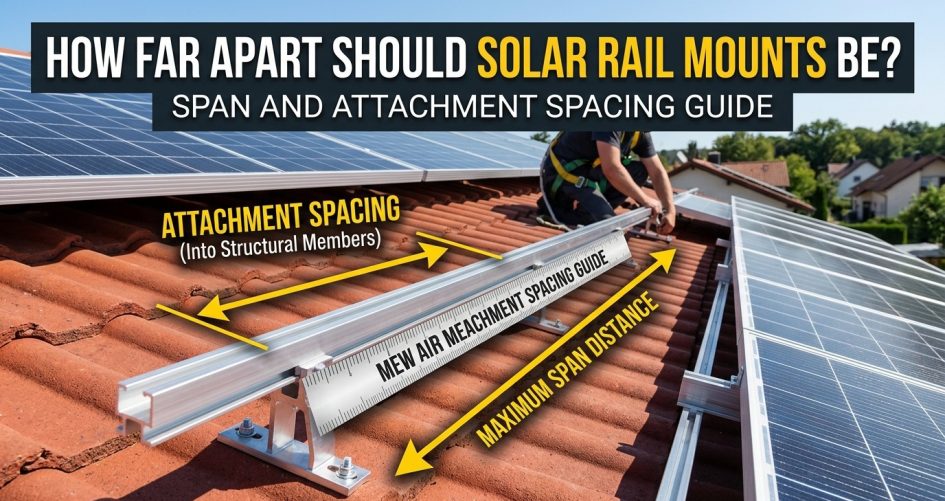
Solar rail mount spacing is one of the most important details in a solar installation because it affects structural strength, panel support, and long-term system reliability. The distance between solar rails, the span between roof attachments, and the location of mounting points all need to match the requirements of the racking system and solar modules being installed.
For homeowners, installers, and anyone purchasing solar mounting equipment from Emston Tech, understanding rail spacing helps ensure the right components are selected for a safe and durable solar array. There is no single spacing measurement that works for every project. Roof type, wind and snow conditions, panel specifications, rail design, and manufacturer instructions all influence the correct layout.
This guide explains how solar rail mounts are spaced, what factors determine attachment distances, common planning guidelines, and practical tips for creating a strong solar mounting system.
Solar rails are aluminum structural components that support photovoltaic modules and transfer loads from the panels into roof attachments or ground-mount structures. Rails typically run horizontally across the array while attachments connect the rails to roof rafters, structural members, or mounting posts.
A properly designed rail system distributes the weight of the solar panels and helps resist forces caused by wind, snow, and temperature changes. Incorrect spacing can create excessive stress on rails, clamps, attachments, or the solar module frames.
| Term | Meaning | Why It Matters |
|---|---|---|
| Rail spacing | The distance between parallel rails supporting the same solar panel row | Determines where panel clamps contact the module frame and how loads are distributed |
| Attachment spacing | The distance between roof mounts, L-feet, brackets, or other connection points along a rail | Controls the maximum unsupported rail span and structural capacity |
| Rail span | The unsupported distance between two attachment points | Affects bending forces on the rail under loading conditions |
Solar racking manufacturers provide allowable spans and attachment layouts based on their specific rail profiles and engineering calculations. Installers should always follow the instructions for the exact mounting system being used. Many systems require installers to locate attachments based on structural members and approved design tables rather than using a universal measurement. :contentReference[oaicite:0]{index=0}
Attachment spacing varies depending on the rail product, roof structure, climate conditions, and engineering requirements. A common residential approach is to place roof attachments several feet apart, but the exact distance must come from the racking manufacturer’s span tables.
Many residential rail systems use attachment spacing in the general range of several feet, but areas with higher wind exposure or heavier snow loads may require closer spacing. The goal is to keep rail spans within the approved limits while attaching securely to the building structure.
| Project Factor | Possible Impact on Attachment Spacing | Installer Consideration |
|---|---|---|
| Heavy snow loads | May require shorter rail spans | Use the racking design requirements for the specific snow zone |
| High wind locations | May require additional attachments | Verify uplift resistance and approved attachment patterns |
| Long rail sections | May require expansion planning or additional supports | Follow rail manufacturer instructions |
| Roof framing layout | Determines possible attachment locations | Attach into structural members whenever required |
Using a random spacing measurement can weaken a solar mounting system. Rails are engineered to support specific loads when installed with approved spans, clamps, and attachments. Increasing the distance between mounts may reduce material usage, but it can also increase rail deflection and stress.
Professional racking guides typically require installers to follow allowable span tables and engineering documents for each system. For example, Unirac installation documentation directs installers to use manufacturer guidelines for rail spacing and attachment placement rather than relying on general assumptions. :contentReference[oaicite:1]{index=1}
Rail span is the unsupported section of rail between two attachment points. When a solar panel array experiences snow accumulation or wind forces, the rail bends slightly between supports. Longer spans create more bending force and may exceed the rail’s design limits.
A shorter span generally provides more support because loads are transferred through more attachment points. However, adding unnecessary attachments can increase installation costs and may not always improve performance if the design already meets engineering requirements.
The distance between two parallel rails is usually determined by where the solar module manufacturer allows clamping. Solar panels have designated mounting zones that identify safe areas for attaching clamps.
Placing rails too close together or too far apart can create improper support points. The correct rail spacing allows the module frame to transfer weight evenly while avoiding excessive stress on the panel.
Solar modules installed in portrait orientation may require a different rail arrangement compared with landscape installations. The rail layout must match the approved clamp locations for the specific panel model.
Before installing rails, review:
A solar rail is only as strong as the structure supporting it. Roof attachments should connect to appropriate structural members rather than relying only on roof decking unless the mounting system specifically allows another method.
Proper flashing and sealing are also important because roof penetrations must remain weather-resistant throughout the life of the solar system.
>
Good rail planning begins before hardware installation. Measure the available roof area, identify structural members, and determine the final panel arrangement. A clear layout helps avoid unnecessary changes during installation.
Solar mounting components are designed to work together. Rails, clamps, attachments, and accessories should be compatible with one another and rated for the intended installation conditions.
When purchasing solar equipment from Emston Tech, selecting the correct mounting hardware is an important step toward building a reliable solar project. A complete mounting solution should consider the roof type, module specifications, environmental conditions, and installation requirements.
There is no universal spacing distance. Attachment spacing depends on the rail system, roof structure, module requirements, and local loading conditions. Always use the manufacturer’s approved span tables and installation instructions.
Reducing attachments without approval can increase rail spans beyond their rated limits. The correct number of attachments should be based on the mounting system design, not simply reducing hardware quantity.
Most framed solar modules require support from multiple rails positioned according to approved clamp locations. The exact configuration depends on the module and racking design.
Yes. Areas with higher snow loads may require shorter spans or additional support points. Solar mounting layouts should account for local environmental conditions.
Yes, but adjustments must remain within the limits of the mounting system design. Roof structure, panel layout, and attachment locations may require a customized layout.
Correct solar rail spacing is a balance between structural support, efficient material use, and proper installation practices. By following manufacturer specifications and selecting compatible equipment from Emston Tech, installers can create solar arrays designed for long-term performance and durability.