Welcome to Emston Tech, One Stop Shop For All Your Solar Needs!
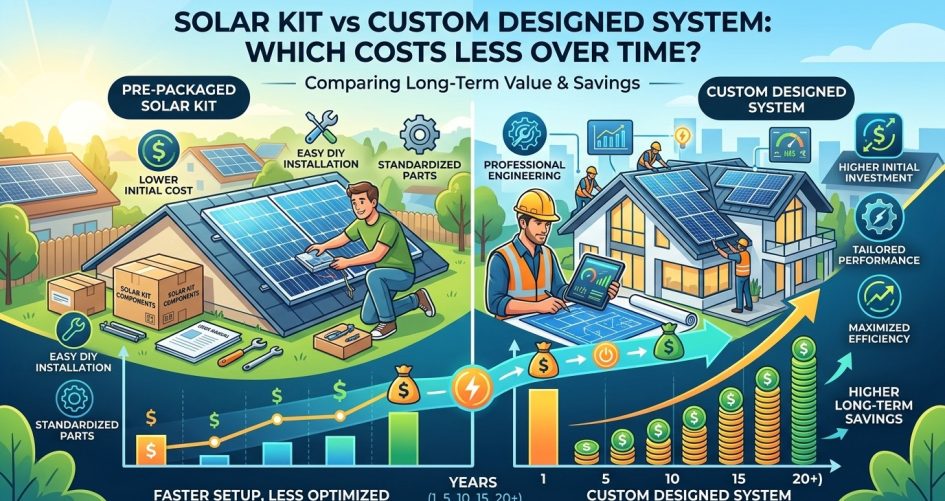
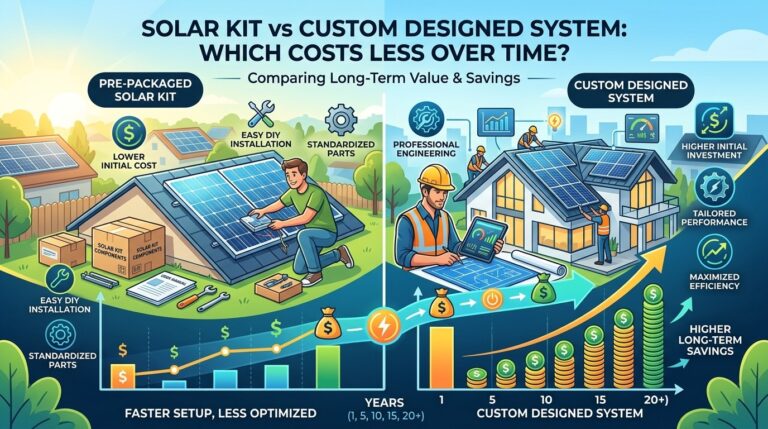
Choosing between a solar kit and a custom designed solar system is one of the most important decisions for homeowners and businesses planning to switch to renewable energy. At first glance, a complete solar kit may appear to be the cheaper option because it includes pre-selected equipment in one package. However, a custom designed system may provide better long-term value by matching equipment, energy production, and future needs more precisely.
Emston Tech provides solar panels, inverters, batteries, complete solar kits, and related solar equipment to help customers build reliable energy solutions. Understanding the differences between solar kits and custom designed systems can help you evaluate not only the initial purchase price but also long-term performance, maintenance needs, flexibility, and overall return on investment.
A solar kit is a package of solar components selected to work together. Depending on the kit, it may include solar panels, an inverter, mounting equipment, wiring, and other necessary parts. Some kits are designed for specific applications such as residential rooftops, cabins, RVs, backup power, or off-grid locations.
The main advantage of a solar kit is convenience. Instead of choosing every component separately, buyers receive a coordinated group of products that simplifies purchasing and planning.
A custom designed solar system is planned around the specific requirements of a property. The design process considers factors such as electricity usage, roof size, shading, available sunlight, battery requirements, local regulations, and future energy goals.
Rather than starting with a fixed package, a custom system allows each component to be selected based on the project’s needs.
| Feature | Solar Kit | Custom Designed System |
|---|---|---|
| Equipment selection | Pre-selected components | Components chosen for the specific project |
| Planning required | Usually less planning | More detailed planning and evaluation |
| Flexibility | Limited to available packages | Highly adaptable |
| Best for | Simple installations and standard needs | Complex properties or specialized energy goals |
Solar kits can reduce initial expenses because manufacturers and suppliers combine commonly used components into a single package. Buyers may save time and avoid the cost of selecting each item individually.
For projects with straightforward requirements, a solar kit can provide an efficient way to purchase compatible equipment without extensive design work.
A custom designed system often requires additional planning, equipment selection, and engineering considerations. These steps can increase the initial project cost.
However, the higher upfront cost may provide benefits over the system’s operating life. A properly sized system can avoid problems caused by under-sizing, unnecessary equipment purchases, or poor component matching.
| Cost Consideration | Solar Kit | Custom Designed System |
|---|---|---|
| Equipment cost | Often predictable package pricing | Varies based on selected components |
| Design costs | Usually lower | May include additional planning expenses |
| Expansion options | May require future modifications | Can be planned from the beginning |
| Long-term optimization | Depends on how well the kit fits the property | Designed around specific energy needs |
A solar kit can perform very well when it is correctly matched to the application. For example, a simple roof with good sun exposure may not require a highly customized design.
However, problems can occur when a standard kit does not account for unique site conditions. Roof angles, shading, energy consumption patterns, and available installation space can influence actual solar production.
A custom system is designed around the property rather than around a pre-existing package. This can help optimize panel placement, inverter selection, battery capacity, and future expansion options.
Important factors considered in custom designs often include:
Maintenance requirements depend on the quality of equipment and installation rather than whether the system came as a kit. A properly installed solar kit can provide dependable performance for many years.
However, replacing or upgrading individual components may be more complicated if the original kit uses specialized or discontinued parts.
Custom systems may offer easier long-term management because components are selected with compatibility and future service needs in mind. A well-planned system can make it easier to replace inverters, add batteries, or expand solar capacity later.
Practical maintenance tips include:
Many solar buyers focus only on their current electricity usage. However, future changes such as purchasing an electric vehicle, adding appliances, expanding a business, or installing battery storage can increase energy demand.
A solar kit may work well today but require additional modifications later if future needs were not considered during the original purchase.
Custom designs can include future expansion plans from the beginning. For example, a system may be designed with additional inverter capacity or battery compatibility in mind.
Before choosing a system, consider:
A solar kit may provide excellent long-term value when the package closely matches the project requirements. Simpler installations often benefit from the convenience and predictable pricing of a kit.
Solar kits may be a practical choice for:
A custom system may cost less over time when it prevents expensive changes later. Proper sizing and equipment selection can help avoid lost energy production, unnecessary upgrades, or compatibility issues.
Properties with unusual layouts, high energy consumption, shading challenges, or battery storage goals often benefit from customized planning.
The best choice depends on your specific situation. Start by reviewing your electricity usage, available installation space, budget, and future plans.
Useful questions to ask include:
Not always. Solar kits often have lower upfront costs, but a custom system may provide better long-term value if it improves performance, avoids future upgrades, or better matches energy needs.
Some solar kits can be expanded, but expansion depends on equipment compatibility, inverter capacity, available space, and system design. Check these factors before purchasing.
Reliability depends on equipment quality, installation, and maintenance. A custom system can be designed around specific conditions, while a properly selected solar kit can also provide reliable performance.
Both options can support battery storage when compatible equipment is selected. Custom designs may provide more flexibility when planning larger or more advanced energy storage solutions.
Consider your energy usage, property layout, budget, and future goals. A simple project may work well with a solar kit, while a complex project may benefit from a custom designed system.
Choosing between a solar kit and a custom designed system is ultimately about matching your investment with your long-term energy goals. Emston Tech offers solar equipment, complete solar kits, and components to help homeowners and businesses create reliable solar solutions based on their needs.