
Welcome to Emston Tech, One Stop Shop For All Your Solar Needs!
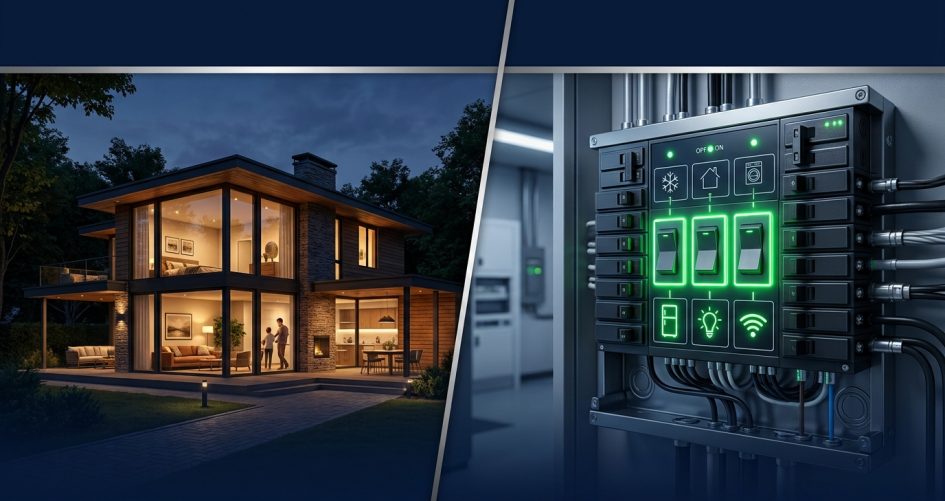
When planning a solar energy system with battery backup, one of the biggest decisions homeowners face is how much of their home they want to keep powered during an outage. Should the battery support the entire electrical panel, or should it focus only on the circuits that matter most?
The answer depends on your energy needs, outage expectations, home electrical setup, and budget. A whole-home battery backup system and a critical loads panel can both provide reliable backup power, but they are designed for different goals. Understanding the differences helps you choose a solar storage solution that matches your priorities.
Emston Tech helps homeowners, installers, and businesses find the right solar equipment, including batteries, inverters, panels, racking solutions, and complete solar kits. This guide explains how whole-home backup and critical loads systems compare so you can make an informed decision.
A whole-home battery backup system is designed to provide backup power to most or all of a home’s electrical circuits during a grid outage. Instead of selecting only a few appliances or rooms, the system is connected so that the home’s main electrical system can continue operating when utility power is unavailable.
Depending on the equipment selected, whole-home backup may support common household loads such as:
However, “whole-home” does not automatically mean unlimited power. Battery storage systems have limits based on their stored energy capacity, inverter output, and the home’s electrical demand. Large loads such as central air conditioning, electric water heaters, and EV chargers can require significant power and may need additional battery capacity or load management.
A critical loads panel, also called an essential loads panel, is a separate electrical panel that powers only selected circuits during an outage. Instead of backing up the entire house, it focuses battery energy on the systems you consider most important.
During installation, certain circuits are moved or connected to the backup panel. When the grid goes down, the battery system supplies electricity only to those selected circuits. :contentReference[oaicite:0]{index=0}
Typical critical loads may include:
The advantage is that the battery is used more efficiently because it is not spending stored energy on unnecessary loads during an outage.
| Feature | Whole-Home Battery Backup | Critical Loads Panel Backup |
|---|---|---|
| Power Coverage | Designed to support most or all home circuits | Supports only selected essential circuits |
| Energy Management | Requires enough battery and inverter capacity for larger loads | Uses energy more selectively by limiting backed-up circuits |
| Installation Approach | May require whole-home transfer equipment or advanced load management | Usually involves a dedicated backup subpanel |
| Backup Experience | Feels closer to normal operation during outages | Provides power for priority needs while non-essential circuits remain off |
| Battery Requirements | Often requires greater capacity for larger household loads | Can work with smaller battery systems depending on selected loads |
Choosing between these backup approaches is not only about battery storage size. Two important specifications matter:
Battery capacity is the amount of energy the system can store. A larger battery can provide power for a longer period, depending on how much electricity your home uses.
For example, a battery supporting only a refrigerator, lights, and internet equipment may last much longer than the same battery powering an entire home with heating, cooling, and large appliances.
The inverter determines how much power can be delivered at one time. A system may have plenty of stored energy but still be unable to start or run certain appliances if the inverter does not provide enough output.
This is especially important for appliances with startup surges, such as:
| Advantages | Considerations |
|---|---|
| Provides broader backup coverage | May require more battery capacity |
| More convenience during outages | Higher system requirements for large appliances |
| Less need to decide which circuits matter | Installation design can be more complex |
| Works well for homeowners seeking maximum resilience | May require additional load management features |
| Advantages | Considerations |
|---|---|
| Focuses battery power on essential needs | Some household circuits will remain without power |
| Can improve backup runtime by reducing unnecessary usage | Requires choosing priority circuits ahead of time |
| Often works well for targeted emergency backup | Large appliances may not be included |
| Provides predictable backup planning | Future changes may require electrical modifications |
The best choice depends on how you use electricity and what you want during an outage.
Before selecting equipment, consider these questions:
A professional system design should evaluate your home’s actual electrical usage rather than relying only on average assumptions.
Yes, but the system must be properly sized for your home’s electrical demand. Whole-home backup depends on battery capacity, inverter output, and the appliances you want to operate during an outage.
No. A critical loads panel is part of a backup system design. It determines which circuits receive power from the battery during an outage.
In many cases, additional circuits can be added, but changes depend on your electrical setup, available capacity, and the equipment installed.
Most standard grid-tied solar systems shut down during outages for safety reasons. Solar panels can provide backup power when paired with compatible battery storage and properly configured equipment.
Choosing between whole-home battery backup and a critical loads panel comes down to your priorities. Whole-home systems provide broader coverage, while critical loads systems focus battery energy on the appliances and circuits that matter most. The right solution depends on your home’s electrical needs, solar setup, and backup goals.
Emston Tech provides solar equipment solutions including panels, inverters, battery backups, solar kits, racking systems, and carport solutions. Our team can help you evaluate your options and select the right components for a reliable solar energy system.