Welcome to Emston Tech, One Stop Shop For All Your Solar Needs!
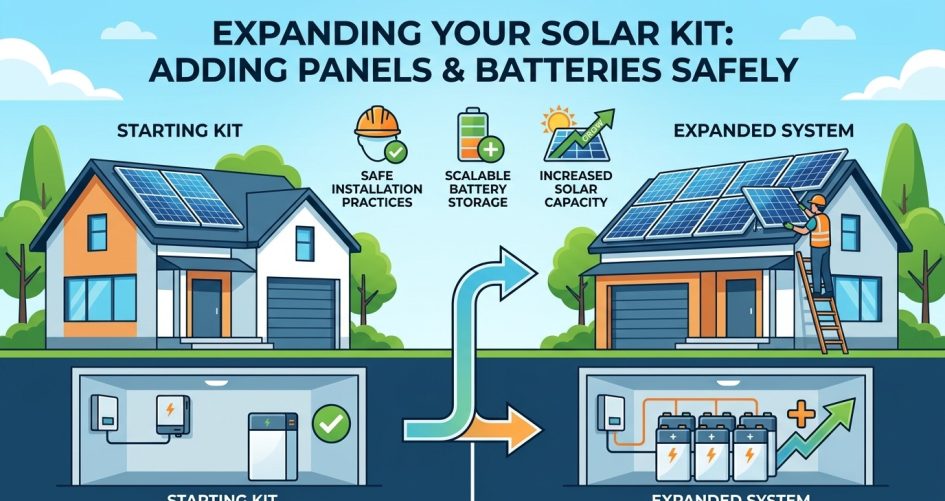
Many homeowners choose a solar kit based on their current electricity needs, then wonder if they can add more equipment later. The good news is that many solar systems can be expanded, but a successful upgrade depends on how the original system was designed. Adding panels, batteries, or both is not simply a matter of connecting new components. Compatibility, inverter capacity, string design, electrical service, permitting, and safe installation practices all need to be considered.
For customers planning a future expansion, Emston Tech helps provide solar equipment options that support thoughtful system design. Understanding expansion limits before installation can help prevent costly redesigns later.
A solar kit can often be expanded when the original design leaves room for additional equipment. The best time to consider future growth is before the first installation, because choices made during the initial design can determine what upgrades are possible later.
Solar users may decide to expand for several reasons:
A future-ready solar design considers not only today’s energy usage but also possible changes several years ahead. This includes selecting an inverter with appropriate capacity, leaving physical space for additional equipment, and documenting the original installation details.
| System Component | Future Expansion Consideration |
|---|---|
| Solar panels | Roof space, electrical characteristics, string limits, and mounting capacity |
| Inverter | Maximum PV input, AC output rating, battery compatibility, and expansion support |
| Battery | Approved additional modules, communication compatibility, and usable capacity limits |
| Electrical panel | Available breaker space, service capacity, and interconnection requirements |
Adding panels to an existing solar kit is possible in many situations, but the existing system determines the available options. The first step is reviewing the current inverter and array design.
The inverter is one of the most important limits in a solar expansion. It converts DC electricity from panels into usable AC electricity for your home. Every inverter has maximum input and output ratings.
Before adding panels, check:
If the inverter is already operating near its limits, adding more panels may require an inverter upgrade, a second inverter, or a redesigned system.
Solar panels connected in series are called a string. The panels in a string must operate within the inverter’s voltage and current limits. Adding panels to an existing string requires careful calculations.
| String Design Factor | Why It Matters |
|---|---|
| Voltage range | The string must remain within the inverter’s MPPT operating window across temperature changes. |
| Current rating | Too much current can exceed inverter input limits. |
| Panel specifications | Different electrical characteristics may reduce compatibility within the same string. |
| Roof orientation | Different shading and sun exposure can affect production performance. |
Using identical or electrically compatible panels is usually easier, but the final design should always follow inverter and manufacturer requirements.
Battery expansion is possible with many solar systems, but not every solar inverter can connect directly to batteries. The correct approach depends on the existing equipment and the intended purpose of the battery.
Some solar systems use hybrid inverters designed to manage both solar generation and battery storage. These systems may allow batteries to be added later if the battery model, communication system, and operating limits are supported.
Important compatibility checks include:
A traditional grid-tied solar inverter may not have battery charging or backup capability. In these cases, adding storage may require a different approach, such as installing a compatible battery inverter, using an approved AC-coupled system, or replacing the inverter with a hybrid model.
The goal of the battery should also be clear:
Each goal may require a different system design.
Solar expansion affects more than the equipment on the roof. The home’s electrical system must also be evaluated. Adding panels or batteries may change how electricity flows through the service equipment.
If the electrical service does not support the planned expansion, upgrades may be required before additional equipment can be installed.
Electrical changes must be designed and installed according to applicable codes and safety requirements. Incorrectly sized equipment or improper connections can create performance problems and safety hazards.
Expanding a solar kit is usually treated as a new electrical project rather than a simple equipment addition. Local requirements vary, but many expansions require updated documentation, permits, inspections, or utility approval.
Good records make future upgrades easier because installers can understand exactly how the system was built.
The order of upgrades matters. A carefully planned sequence reduces compatibility problems and avoids unnecessary equipment replacement.
Solar upgrades can become expensive when compatibility is ignored. Some common mistakes include:
A well-designed expansion focuses on the complete system rather than individual components. Panels, inverters, batteries, wiring, protection equipment, and software controls must work together.
Yes, in many cases you can add panels, but the inverter capacity, string design, roof space, electrical service, and local requirements must be reviewed first. Some systems may need a larger inverter or additional equipment.
Sometimes. The available options depend on the existing inverter and system design. A battery-ready inverter may support direct expansion, while other systems may require AC-coupled storage or inverter replacement.
No. Additional batteries usually increase stored energy capacity. The inverter’s maximum AC power output remains limited by its specifications.
Many locations require permits and inspections for solar expansions, electrical modifications, or battery installations. Requirements vary by local authority and utility provider.
Yes. Planning ahead can make future upgrades easier. Discuss possible future panel additions, battery storage, and electrical needs before selecting the initial equipment.
Expanding a solar kit later can be a practical way to grow your renewable energy system, but safe expansion depends on careful engineering and compatibility checks. By choosing equipment thoughtfully from the beginning and following proper installation procedures, homeowners can build a solar system that adapts to changing energy needs.