Welcome to Emston Tech, One Stop Shop For All Your Solar Needs!
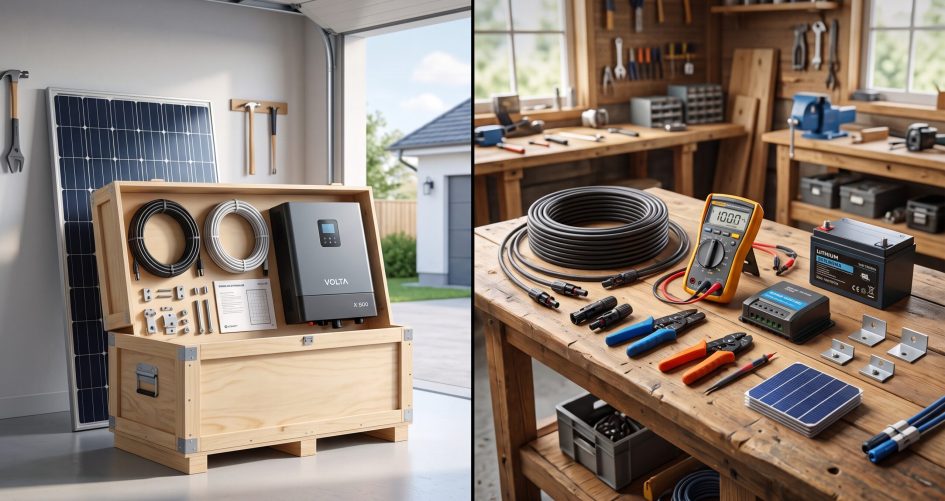
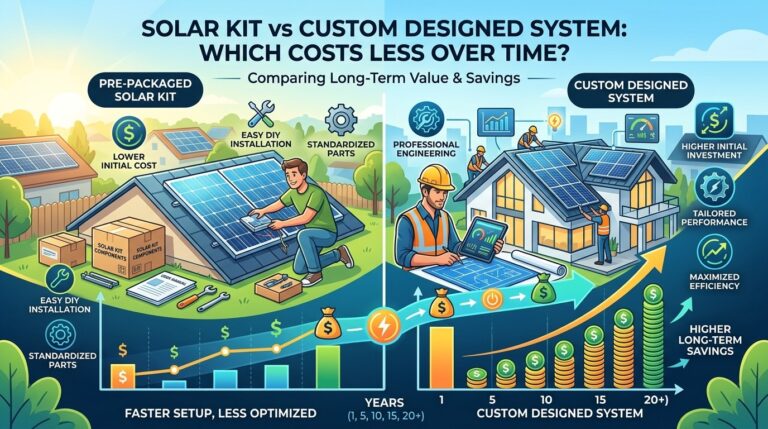
Solar energy has become more accessible than ever, giving homeowners and businesses new ways to reduce electricity costs and gain greater control over their energy use. However, one important decision remains before starting a solar project: should you purchase a complete solar kit or build a DIY solar system from individual components?
Both approaches have advantages and challenges. A complete solar kit provides a pre-designed package with compatible components, while a DIY solar project allows you to select each part and customize the system according to your preferences.
Choosing between a complete solar kit and DIY depends on your technical experience, budget, installation goals, and the complexity of your energy needs. At Emston Tech, we help customers across the United States find reliable solar equipment solutions for residential, commercial, and off-grid applications.
This guide compares complete solar kits and DIY solar systems, explains the differences, and helps you determine which option is the right fit for your solar energy project.
A complete solar kit is a packaged solar energy system that includes the major components required for installation. These kits are designed to work together and are often configured based on a specific system size or application.
A typical complete solar kit may include:
The main advantage of a complete kit is convenience. Instead of researching and matching every component individually, customers receive a coordinated system designed for compatibility.
A DIY solar system allows you to purchase solar components separately and design the system yourself. This approach gives you complete control over equipment selection, system size, and installation choices.
A DIY solar project typically involves selecting:
DIY solar can be appealing for experienced homeowners, electricians, engineers, and off-grid enthusiasts who want maximum customization.
The biggest difference between these approaches is the level of customization and responsibility. Complete solar kits simplify the process, while DIY systems provide greater flexibility.
| Feature | Complete Solar Kit | DIY Solar System |
|---|---|---|
| System Design | Pre-designed package | Fully customized by user |
| Component Matching | Components selected for compatibility | User must verify compatibility |
| Installation Difficulty | Generally easier | Requires technical knowledge |
| Customization | Limited customization | Maximum flexibility |
| Research Required | Lower | Higher |
| Best For | Homeowners and first-time solar buyers | Experienced DIY installers |
One of the biggest advantages of a complete solar kit is simplified planning. The main components are already selected to work together, reducing the chance of compatibility problems.
This is especially helpful for customers who are new to solar and do not want to spend significant time researching technical specifications.
Because the components are packaged together, installation can often be completed more efficiently. Customers spend less time sourcing individual parts and verifying system requirements.
Solar systems require multiple components to work together correctly. A complete kit reduces the risk of issues involving:
When components come from a coordinated package, troubleshooting and technical support may be simpler because the system design is already documented.
DIY systems allow you to choose every component based on your specific requirements. You can select different panel technologies, inverter brands, battery sizes, and mounting options.
By handling system design and installation yourself, you may reduce labor expenses and have more control over equipment costs.
DIY solar is often useful for specialized applications such as:
| Category | Complete Solar Kit | DIY Solar System |
|---|---|---|
| Equipment Selection | Pre-selected components | Individually chosen components |
| Initial Research | Minimal | Extensive |
| Installation Time | Usually faster | Depends on experience |
| Technical Skill Needed | Basic to moderate | Moderate to advanced |
| System Flexibility | Standard configurations | Fully customizable |
| Support | Often easier with matched components | Depends on individual suppliers |
A complete solar kit is often a good choice for customers who want a simpler installation process and reliable system design.
A DIY solar system may be better for customers with technical experience who want complete control over their project.
Selecting the right approach depends on your goals, experience level, and project requirements.
If you are comfortable working with electrical systems and solar equipment, DIY may provide more flexibility. If you prefer simplicity, a complete kit may be the better option.
Calculate your electricity usage and decide whether you need a small backup system, a residential solar installation, or a larger energy solution.
Roof-mounted systems, grid-connected systems, and battery installations often require more planning than small off-grid projects.
Look beyond the purchase price. Consider reliability, warranty coverage, support, maintenance, and future expansion options.
Whether you choose a complete solar kit or a DIY approach, quality components are essential. Emston Tech provides dependable solar equipment solutions designed for different energy applications.
A complete solar kit can be better for customers who want a simpler installation process and compatible components. DIY systems may be better for experienced users who want more customization.
Some solar kits are designed for DIY installation, but electrical connections, permits, and local regulations should always be considered before installation.
DIY systems may reduce labor costs, but total savings depend on equipment choices, installation ability, and project complexity.
Many solar systems can support battery upgrades if compatible equipment is selected. Planning for future storage during the initial design can make expansion easier.
Choosing between a complete solar kit and a DIY solar system depends on your experience, budget, and energy goals. Complete kits provide convenience, compatibility, and easier planning, while DIY systems offer maximum customization and control.
The right choice is the one that matches your technical ability, installation requirements, and long-term energy plans.
Emston Tech offers reliable solar kits and individual solar components to help homeowners and businesses create efficient renewable energy systems.
Explore Emston Tech solar solutions today and find the right equipment for your solar project.