Welcome to Emston Tech, One Stop Shop For All Your Solar Needs!
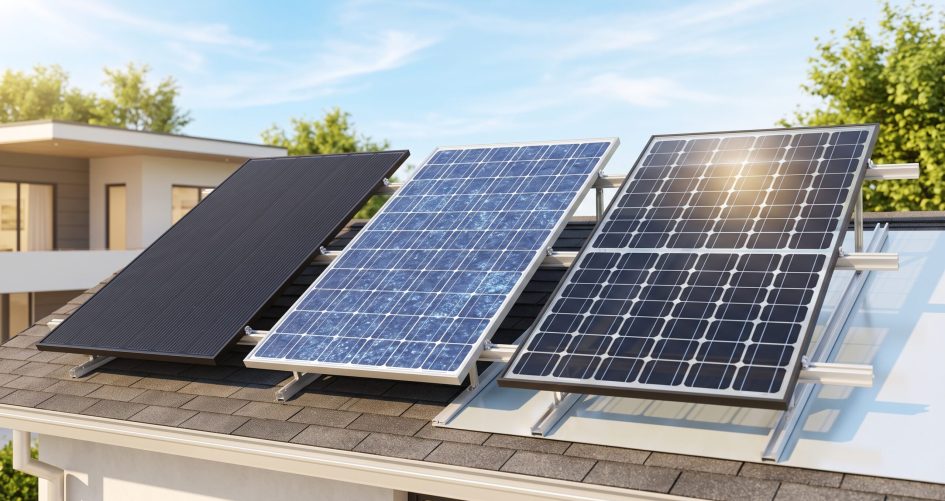
Choosing the right solar panel is one of the most important decisions when building a solar energy system. With several technologies available today, homeowners and businesses often compare Monoperc (monocrystalline PERC), polycrystalline, and bifacial solar panels to determine which option delivers the best performance, value, and long-term savings.
Solar panels may look similar from the outside, but differences in silicon structure, cell design, efficiency, and construction can significantly impact electricity production and return on investment. Monocrystalline panels have become the standard choice for many residential installations, while polycrystalline panels remain a budget-focused option, and bifacial panels are gaining popularity for specialized applications such as ground-mounted and commercial systems. (EnergySage)
At Emston Tech, we help customers across the United States find reliable solar equipment designed for their energy goals. This guide explains the differences between Monoperc vs Polycrystalline vs Bifacial solar panels so you can make an informed decision.
Monoperc solar panels are monocrystalline panels that use PERC (Passivated Emitter and Rear Contact) technology. They are made from a single silicon crystal, allowing electrons to move more efficiently through the solar cell.
The PERC layer improves energy capture by reflecting unused sunlight back through the cell, increasing overall power generation compared with older monocrystalline designs.
Monocrystalline panels typically offer efficiency levels around 20%–23% in modern residential products, making them one of the most efficient mainstream solar technologies available. (EnergySage)
Polycrystalline solar panels are made by melting multiple silicon fragments together to create solar cells. Because the manufacturing process is simpler, these panels historically offered a lower-cost alternative to monocrystalline technology.
Polycrystalline panels usually have a recognizable blue appearance caused by the multiple silicon crystals inside the cell.
As monocrystalline manufacturing costs have decreased, the price difference between mono and poly panels has narrowed, causing many modern installations to favor monocrystalline technology. (EnergySage)
Bifacial solar panels are designed to generate electricity from both sides of the panel. The front surface captures direct sunlight, while the rear surface captures reflected sunlight from the ground, rooftops, snow, or other reflective surfaces.
Most bifacial panels use advanced monocrystalline cells combined with transparent backsheets or glass-glass construction.
Bifacial panels are especially effective for ground-mounted systems, solar carports, and installations using reflective surfaces. (EnergySage)
Efficiency determines how much electricity a panel can generate from available sunlight. Higher efficiency means more power production from a smaller installation area.
| Feature | Monoperc Solar Panels | Polycrystalline Solar Panels | Bifacial Solar Panels |
|---|---|---|---|
| Solar Cell Type | Monocrystalline PERC | Multi-crystalline silicon | Usually monocrystalline with dual-sided generation |
| Typical Efficiency | 19%–22% | 15%–18% | 20%–23%+ with rear-side gain |
| Energy Output | High | Moderate | Very high in ideal conditions |
| Roof Space Required | Less space needed | More space needed | Similar to mono panels |
| Best Advantage | High efficiency and reliability | Lower initial cost | Extra energy generation |
Solar panels are a long-term investment, so equipment price is only one factor. Warranty coverage, expected lifespan, and degradation rates also affect total value.
| Category | Monoperc | Polycrystalline | Bifacial |
|---|---|---|---|
| Average Cost Per Watt (Panel Only) | About $0.20–$0.35/W | About $0.18–$0.30/W | About $0.25–$0.40/W |
| Typical Lifespan | 25–30+ years | 25+ years | 30+ years |
| Product Warranty | Usually 10–25 years | Usually 10–25 years | Usually 12–30 years depending on brand |
| Performance Warranty | Often 25 years | Often 25 years | Often 25–30 years |
| Maintenance Needs | Low | Low | Low |
| Long-Term Value | Excellent | Good for budget projects | Excellent when properly installed |
Actual pricing depends on the manufacturer, system size, availability, and installation requirements.
If you have limited roof space, efficiency matters. Monoperc and bifacial panels can produce more electricity per square foot compared with polycrystalline panels.
Temperature affects solar output. High-quality monocrystalline and bifacial panels generally perform well in hot environments because of improved cell designs and materials.
Your mounting location plays a major role:
A cheaper panel is not always the lowest-cost option over 25 years. Higher-efficiency panels may generate more electricity and provide greater savings over the system’s lifetime.
The right solar panel depends on your location, budget, available space, and energy requirements.
For most residential customers, Monoperc panels offer an excellent balance of price, efficiency, and reliability.
Polycrystalline panels can still be useful for certain projects where available space is not a limitation.
Bifacial technology is especially valuable when the rear side of the panel receives meaningful sunlight.
Monoperc panels generally provide higher efficiency and better power output per square foot than polycrystalline panels. Polycrystalline panels may cost less upfront but usually require more space to produce the same amount of electricity.
Bifacial panels can produce more electricity because they capture sunlight from both sides. However, the additional energy depends on installation conditions, including ground reflectivity, panel height, and system design.
Most quality solar panels are designed to operate for 25 years or longer. Many modern panels continue producing electricity beyond their original warranty period with gradual efficiency reduction.
For most homeowners, monocrystalline PERC panels are a popular choice because they provide high efficiency, require less space, and offer strong long-term performance.
Understanding the differences between Monoperc vs Polycrystalline vs Bifacial solar panels makes it easier to choose the right equipment for your solar project.
Monoperc panels are ideal for many residential installations, polycrystalline panels remain a budget-friendly option for certain applications, and bifacial panels offer excellent performance opportunities for specialized systems.
Ready to upgrade your solar setup? Explore reliable solar equipment from Emston Tech and find the panels, components, and solutions that fit your energy needs. Start building a smarter, more efficient solar future today.