Welcome to Emston Tech, One Stop Shop For All Your Solar Needs!
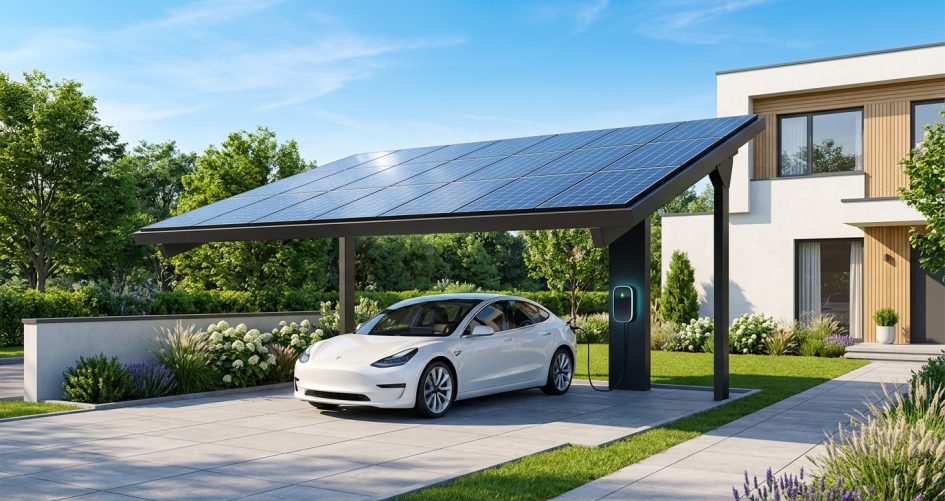
A solar carport is a smart way to combine renewable energy generation with everyday vehicle protection. Instead of installing solar panels only on a rooftop, a solar carport uses a specially designed structure to support photovoltaic (PV) panels above a parking area. This allows homeowners, businesses, and organizations to create clean electricity while also providing shade and weather protection for vehicles.
For many property owners in the United States, solar carports are becoming an attractive alternative to traditional solar installations. They can help reduce electricity costs, maximize unused parking space, and support energy independence. Emston Tech offers a range of solar equipment solutions designed to help customers build efficient solar power systems, including solar carport applications for residential and commercial needs.
This guide explains what a solar carport is, how it works, its benefits, installation costs, and how to choose the right system for your property.
A solar carport is a covered parking structure equipped with solar panels on its roof. The panels capture sunlight and convert it into electricity through the photovoltaic process. The generated power can be used to operate a home, business, electric vehicle (EV) charging station, or other electrical equipment.
Unlike a traditional carport that only provides shelter, a solar carport serves two purposes:
Solar carports can be installed as standalone structures in driveways, parking lots, commercial properties, schools, and government facilities. They are especially useful when a building has limited roof space, an unsuitable roof angle, or shading issues that reduce rooftop solar performance.
A solar carport works similarly to a standard solar panel system. Solar modules installed on the carport roof absorb sunlight and produce direct current (DC) electricity. An inverter then converts the DC electricity into alternating current (AC) power that can be used by household appliances or commercial equipment.
A typical solar carport system includes:
Solar carports offer several advantages compared with traditional parking structures and rooftop solar installations.
One of the biggest advantages of a solar carport is that it uses existing parking areas for energy production. Properties with small roofs, older buildings, or limited rooftop space can still benefit from solar power.
A properly sized solar carport can significantly reduce electricity bills by producing power directly on-site. Businesses with large parking areas may offset a portion of their energy consumption by installing larger solar carport systems.
Solar carports provide covered parking that helps protect vehicles from intense sunlight, rain, hail, and snow. The shaded parking area can also reduce interior vehicle temperatures during hot weather.
Solar carports are an excellent solution for EV charging because they allow clean electricity generation at the same location where vehicles are parked. Homeowners and businesses can combine solar panels, battery storage, and EV chargers to create a more sustainable transportation setup.
Adding renewable energy infrastructure can make a property more attractive to environmentally conscious buyers, tenants, and customers. Commercial solar carports can also support corporate sustainability objectives by reducing reliance on traditional energy sources.
Choosing between a rooftop solar system and a solar carport depends on available space, energy goals, and budget. The following table highlights the main differences.
| Feature | Solar Carport | Rooftop Solar |
|---|---|---|
| Installation Location | Parking areas, driveways, or open land | Existing building roof |
| Primary Function | Energy generation plus vehicle protection | Electricity generation only |
| Space Requirements | Requires available parking or open space | Requires suitable roof area |
| Maintenance Access | Usually easier panel access | May require roof access equipment |
| Additional Benefit | Provides shade and weather protection | Uses existing structure |
The cost of a solar carport depends on several factors, including system size, materials, installation complexity, location, and whether additional equipment such as batteries or EV chargers is included.
In the United States, residential solar carports commonly range from approximately $15,000 to $35,000 before incentives, while larger commercial installations can cost significantly more depending on design and energy requirements.
| Cost Factor | Description | Typical Impact |
|---|---|---|
| System Size | Larger solar arrays produce more electricity but require more materials. | Higher upfront cost |
| Solar Panel Type | Efficiency and brand quality affect pricing and performance. | Moderate cost variation |
| Structure Design | Single-car, multi-car, and commercial structures require different materials. | Can significantly affect cost |
| Battery Storage | Allows backup power and energy storage. | Adds additional investment |
| Installation Requirements | Permits, electrical work, and site preparation influence total expenses. | Varies by location |
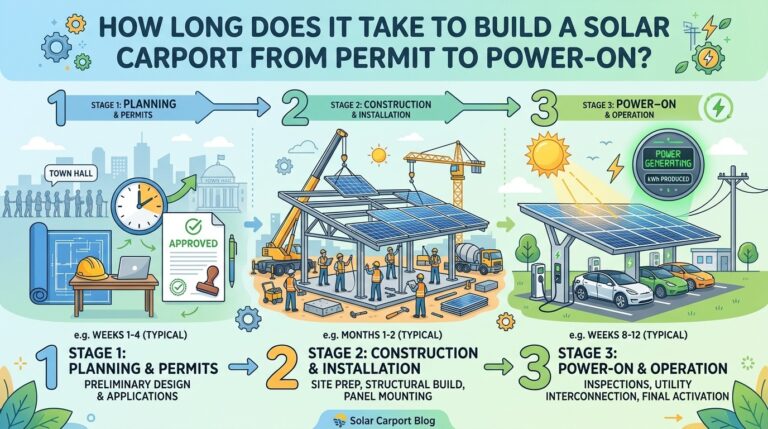
Installing a solar carport involves several important steps to ensure safety, performance, and compliance with local requirements.
Selecting the right solar carport requires careful consideration of your property, electricity usage, and future energy goals.
Review your current electricity consumption to estimate the solar system size you need. A larger system may be beneficial for properties with higher energy demand or future plans for EV charging.
Measure your parking area and consider the number of vehicles you want to cover. Make sure the location receives sufficient sunlight throughout the day.
High-quality solar panels, inverters, and mounting components can improve system reliability and long-term performance. Emston Tech provides solar equipment options designed for residential and commercial applications.
If you want backup power or plan to charge electric vehicles, consider adding battery storage and EV charging capabilities during the initial design phase.
Solar carports may require permits, engineering approval, or specific construction standards depending on your location. Always review local regulations before starting installation.
Solar carports can be a valuable investment for property owners who have available parking space and want renewable energy generation combined with vehicle protection. The overall value depends on electricity rates, system size, installation costs, and available incentives.
A well-designed solar carport can provide reliable service for decades. Solar panels commonly have performance warranties of 20 to 30 years, while the structural components are designed for long-term outdoor use.
Yes. Solar carports can be integrated with EV charging stations to provide solar-generated electricity for electric vehicles. Adding battery storage can also help manage energy use when sunlight is unavailable.
Yes. Solar panels can still generate electricity on cloudy days, although energy production may be lower compared with bright sunny conditions. Proper system design helps maximize performance based on local weather patterns.
A solar carport is more than a parking structure—it is a practical renewable energy solution that combines clean power generation with everyday convenience. Whether you are a homeowner looking to reduce electricity costs or a business seeking sustainable energy options, a solar carport can help you make better use of available space.
Emston Tech provides reliable solar equipment solutions to help customers design efficient solar energy systems. Explore solar carport options today and take the next step toward affordable, sustainable energy for your property.